


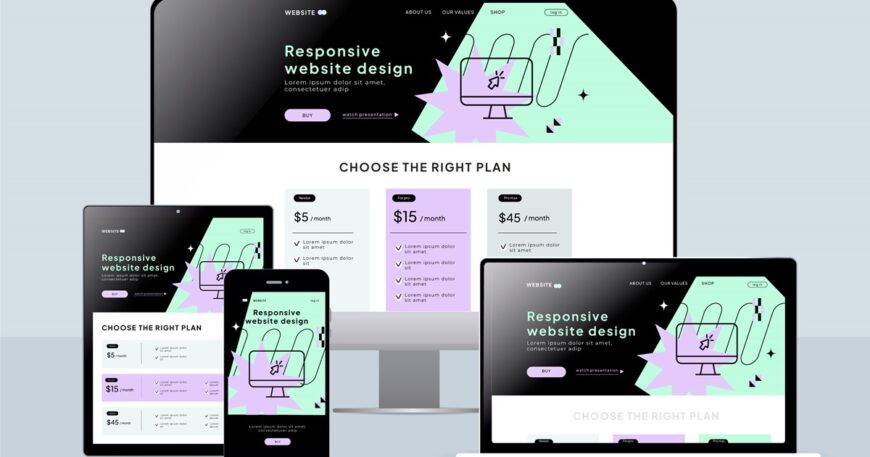
In 2025, a website is no longer just a digital brochure, it’s your business’s frontline, sales engine, and credibility hub all rolled into one.
For companies competing in increasingly saturated markets, a high-performing website is not optional; it is the core infrastructure for growth.
At DuraTech, we engineer digital excellence by ensuring every project meets the 7 critical elements outlined below.
1. Lightning-Fast Load Speed
A beautiful website is useless if it’s slow. Studies show that a delay of even one second can reduce conversions by up to 7%. In 2025, with faster internet everywhere, user patience is lower than ever.
What to do:
- Use modern, lightweight code frameworks.
- Optimize images and videos without compromising quality.
- Employ a Content Delivery Network (CDN) to serve content faster worldwide.
2. Mobile-First Design
More than 70% of web traffic now comes from mobile devices. A site that works flawlessly on smartphones isn’t just a perk — it’s the standard.
What to do:
- Design for mobile before scaling up to desktop.
- Ensure thumb-friendly navigation and readable text without zooming.
- Test responsiveness across multiple devices and browsers.
3. Strategic SEO Foundation
A stunning website without SEO is like a billboard in the desert — impressive but unseen.
What to do:
- Integrate on-page SEO from the start (titles, meta descriptions, alt tags).
- Build a logical content hierarchy with H1, H2, and H3 tags.
- Ensure clean URLs and schema markup for better search visibility.
4. Clear, Conversion-Focused Messaging
Users decide within seconds if they want to stay on your site. The wrong words can cost you a client.
What to do:
- Craft a clear value proposition above the fold.
- Use powerful calls-to-action (CTAs) throughout the page.
- Avoid jargon; focus on outcomes your clients care about.
5. Trust & Credibility Signals
In the age of scams and misinformation, trust is your greatest currency.
What to do:
- Showcase testimonials, case studies, and awards.
- Include security badges if collecting sensitive data.
- Display your company history and leadership team to humanize your brand.
6. Integrated Analytics & Tracking
Without data, you’re flying blind. Analytics lets you measure what’s working, and fix what isn’t.
What to do:
- Install Google Analytics 4 or similar tools from day one.
- Track conversions, bounce rates, and user flow.
- Use heatmaps to understand where visitors click and scroll.
7. Scalability & Future-Proofing
Your website should grow with you — not hold you back when traffic increases or services expand.
What to do:
- Choose a CMS or tech stack that can handle expansion.
- Keep your code modular for easy feature additions.
- Regularly update to patch security vulnerabilities.
In 2025, your website is not just a project, it’s a living asset that can either elevate or limit your business growth. By implementing these 7 elements, you position your brand to attract, convert, and retain more customers than ever before.
